You may have seen the headlines this month about a UK dog food brand recalling meals after nearly 200 dogs reportedly developed sudden “dry eye.” Whatever the final cause turns out to be in those cases, the story has put a spotlight on a condition we see regularly in practice — one that’s generally a slow, silent problem rather than a sudden one: keratoconjunctivitis sicca, or KCS, better known as dry eye.
What Is Dry Eye?
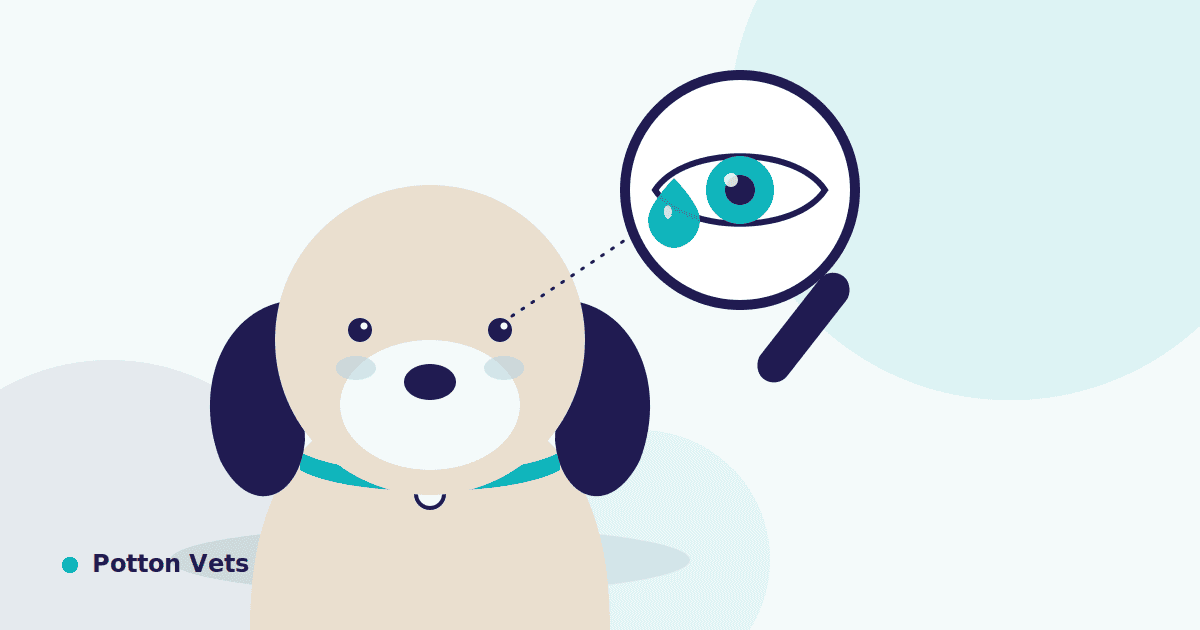
Dry eye happens when a dog’s tear glands stop producing enough tears to keep the surface of the eye lubricated, clean and protected. It’s most often caused by the dog’s own immune system gradually attacking the tear glands, though it can also follow certain infections, medications, nerve damage, or hormonal disease. Some breeds — Cavalier King Charles Spaniels, Bulldogs, Pugs, West Highland White Terriers and Cocker Spaniels among them — are more prone to it.
Why It’s So Easy to Miss
This is the part owners are often surprised by: dry eye is usually gradual and insidious. There’s rarely a single dramatic moment — instead, tear production quietly drops over months or years. Early signs (a bit of redness, some thicker discharge, a dog blinking a little more than usual) are easy to write off as hay fever, a minor irritation, or “just getting older.” By the time it’s obvious to an owner at home, the surface of the eye may already have been under sustained stress for a long time.
Why Catching It Early Matters So Much
Left untreated, chronic dry eye causes ongoing pain and progressively damages the cornea — scarring, pigmentation and new blood vessel growth can build up over time, and in advanced cases this can threaten a dog’s sight. The encouraging news is the opposite is also true: caught early, dry eye responds very well to treatment in the great majority of dogs, usually with daily eye drops rather than anything invasive, and long-term comfort and vision are typically well maintained.
How We Catch It Early: the Schirmer Tear Test
The Schirmer Tear Test is the simple, quick, standard way to measure how many tears a dog is actually producing — a small paper strip is held gently against the inside of the lower eyelid for 60 seconds. It’s painless, takes a minute, and needs no sedation. Because dry eye develops so gradually, a single test at the point a dog starts showing symptoms can already be catching things later than we’d like — which is exactly why we don’t wait for symptoms.
That’s why, for more than 10 years, an annual Schirmer Tear Test has been built into Potton Vets’ Pet Health Club for every dog member, alongside full health checks, vaccinations, parasite cover and more. It’s a small, quick check that gives us the best chance of picking up reduced tear production before your dog is showing any obvious signs at all, when treatment works best.
If your dog isn’t already a Pet Health Club member, you can find out what’s included here: Potton Vets Pet Health Club.
And if you’ve noticed any redness, thicker discharge, or excessive blinking in your dog’s eyes, please don’t wait for their next annual check — give us a call.
📚 Learn More From These Veterinary Sources
- American College of Veterinary Ophthalmologists — Dry Eye (KCS)
- Cornell University Riney Canine Health Center — Keratoconjunctivitis Sicca in Dogs